

Collagen After 35: Dose, Skin Evidence, and Hype
Do adults over 35 need collagen supplements, and can they slow visible aging, or do they mainly sell hope in a scoop? Collagen production changes with age, but age alone doesn't create a clinical need for supplementation.
The evidence is more restrained than the advertising. Hydrolyzed collagen peptides may modestly improve skin hydration and elasticity for some people, while claims about wrinkles, hair, nails, and restored youth are far less certain.
https://www.youtube.com/watch?v=y25CkVHJ3Dk
Key Takeaways
- Studies of skin usually use 2.5 to 10 grams of hydrolyzed collagen peptides daily.
- Benefits, when they occur, tend to appear after 8 to 12 weeks of consistent use.
- Skin hydration and elasticity have the strongest, though modest, research support.
- Collagen has weaker evidence for hair and nails, and mixed evidence for joint symptoms.
- Product labels, source materials, realistic expectations, and sun protection matter more than dramatic anti-aging claims.
How Much Collagen Supplement Is Enough After 35?
There is no official collagen dose for people over 35. In skin studies, researchers commonly use 2.5 to 10 grams of hydrolyzed collagen peptides per day, with 5 to 10 grams appearing often. Joint studies also frequently use 5 to 10 grams, although some trials of undenatured type II collagen use much smaller amounts.
Higher doses have not been proven to produce better results. When a benefit appears, it usually takes 8 to 12 weeks, not a few days. That timeline matters because skin dryness, seasonal weather, exercise, diet, and expectations can all affect personal impressions.
Why Hydrolyzed Collagen Peptides Matter More Than the Word "Collagen"
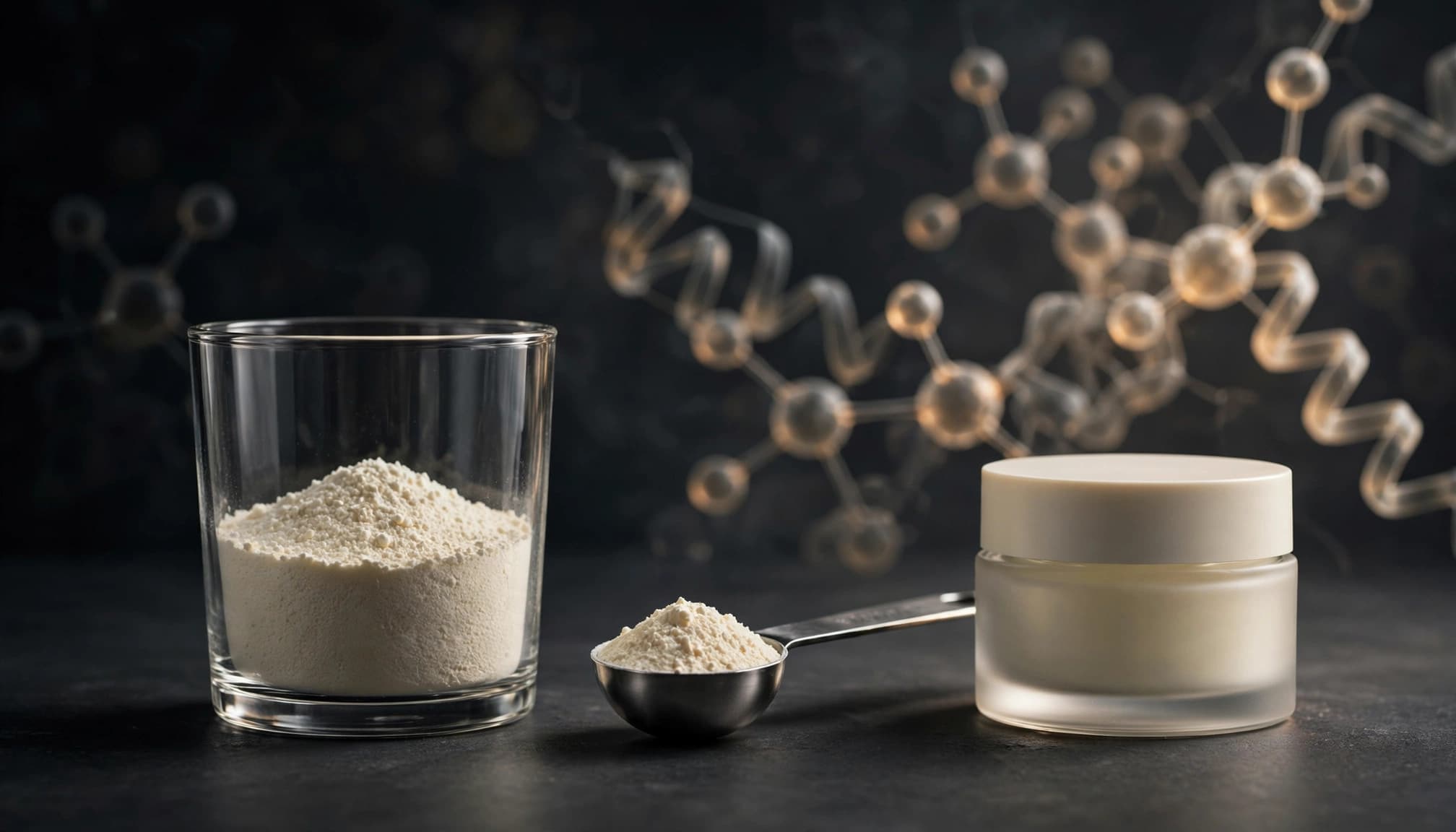
Collagen is a protein, but products carrying that word aren't interchangeable. Most positive oral-supplement studies involve hydrolyzed collagen peptides, collagen proteins broken into smaller pieces that dissolve easily in liquid.
Gelatin comes from collagen but forms a gel when cooled and isn't always tested in the same way. Native collagen remains more intact, while undenatured type II collagen is often studied for joint-related purposes at much lower doses. A powder, capsule, drink, or beauty blend may contain different peptide sizes, sources, and added ingredients, so a study on one formula doesn't automatically apply to another.
How to Read the Serving Size on a Collagen Label
The useful number is the grams of collagen peptides per daily serving. A large scoop may include flavoring, sweeteners, or vitamins, while a small capsule may contain only a fraction of the amount used in research.
Single-ingredient powders make dose comparisons easier. Flavored drinks can be convenient, but the label should still state the peptide amount. Biotin and vitamin C are often added, yet their presence doesn't prove a formula works better. Serving instructions also matter because some labels list a partial scoop or several capsules as one daily dose.
Best Collagen Supplement for Skin and Benefits of Collagen for Skin: What the Evidence Shows
The best collagen supplement for skin is not established by advertising claims or a product's source alone. Research points to hydrolyzed peptides as the form with the clearest evidence, but the outcome is usually subtle.
A 2023 systematic review and meta-analysis examined 26 randomized controlled trials involving 1,721 participants. It found improvements in measures of skin hydration and elasticity across the included research. However, the trials varied in dose, product, duration, and outcome measures. Many were small, short, and linked to industry funding.

Statistical improvement on a skin measurement device is not the same as a dramatic change in a mirror. A newer review of oral collagen studies also found positive instrumental measures, but product differences make broad promises difficult to defend.
Can Collagen Really Keep Skin Looking Younger?
Oral collagen may support skin moisture and elasticity, but it hasn't been shown to reverse aging or rebuild youthful skin in a dramatic way. "May modestly improve hydration" is a fair reading of the evidence. "Erases wrinkles" and "restores youth" are not.
Sun exposure remains a major driver of visible photoaging. Daily sunscreen, avoiding tobacco, adequate protein and micronutrients, sleep, and dermatologist-guided treatments have stronger roles in preserving skin than a collagen drink alone. The benefits of collagen for skin, where present, belong within that wider routine.
A modest improvement in hydration can make skin feel more comfortable, but it should not be mistaken for a reversal of age-related skin changes.
What About Hair, Nails, and Joints?
Evidence for skin doesn't transfer automatically to hair, nails, or joints. Hair-growth and hair-thickness claims have little convincing clinical support. Nail research is also limited. One often cited study involved only 25 participants, used 2.5 grams daily for 24 weeks, and lacked a placebo comparison.
Joint evidence is more substantial but still mixed. Some studies report less pain and better function in people with osteoarthritis or activity-related joint discomfort. Yet collagen is not a disease-modifying arthritis treatment, and persistent swelling, instability, or severe pain needs medical assessment.
Marketing Claims Versus What Collagen Research Actually Proves
The collagen market often turns modest findings into sweeping promises. A claim should be judged against the actual trial: randomized human participants, the exact product and dose, a suitable comparison group, and effects that last longer than a few weeks.
| Common claim | What current evidence supports |
|---|---|
| "Removes wrinkles" | Some studies report small changes, but not reliable wrinkle removal. |
| "Permanent anti-aging" | No evidence shows permanent reversal of skin aging. |
| "Works instantly" | Research usually measures outcomes after 8 to 12 weeks. |
| "Makes hair grow faster" | Clinical support is weak. |
| "Builds stronger nails" | Evidence is limited and based on small studies. |
| "Marine is always superior" | Research does not clearly prove this. |
The pattern is clear: positive results can be product-specific and short-lived. A glossy before-and-after image can't substitute for a well-designed trial.
Marine, Bovine, and Plant-Based Collagen Are Not the Same
Marine collagen usually comes from fish, while bovine collagen comes from cattle. Each source may suit different dietary, religious, allergy, cost, or sourcing preferences. Fish or shellfish allergies require particular caution with marine products.
Plant-based collagen is a marketing shorthand. Plants don't produce collagen, although vegan products can provide amino acids, vitamin C, or other nutrients involved in normal collagen production. Those formulas may fit a plant-based diet, but they aren't collagen itself.
Current evidence doesn't show that marine collagen works better than bovine collagen for skin. The more important questions are whether a product contains hydrolyzed peptides, how many grams it provides, and whether its claims match human research.
How to Choose a More Trustworthy Supplement
A cautious buyer can look for hydrolyzed collagen peptides, a clearly stated daily gram amount, source details, allergen warnings, and credible third-party testing. Products that imply treatment for arthritis, disease, or major skin repair deserve added skepticism.
The FDA does not pre-approve dietary supplements for safety and effectiveness before sale. Its dietary supplement oversight information explains why label claims require careful reading. Those comparing general wellness products can Explore options while still treating a clear label and realistic claims as the first tests of quality.
Safety, Side Effects, and Who Should Ask a Clinician First
Short-term studies generally report few serious problems. Still, collagen can cause an unpleasant taste, fullness, digestive discomfort, or intolerance. "Natural" does not mean risk-free, particularly when a formula includes herbs, high-dose vitamins, sweeteners, or several active ingredients.
People with fish or shellfish allergies should avoid marine collagen unless a clinician confirms it is appropriate. Those with kidney disease, protein-restricted diets, pregnancy, breastfeeding, or complex medication and supplement routines should ask a clinician or pharmacist first. Collagen should never replace treatment for a diagnosed condition.
A Sensible Eight-to-Twelve-Week Trial
A measured trial starts with one clearly labeled product and a daily amount within the commonly studied range. The rest of the skin-care or exercise routine should remain stable, because changing several habits at once makes results impossible to interpret.
Skin dryness, perceived tightness, or joint comfort are more useful observations than a daily inspection for wrinkles. Expectations can influence how changes feel, so notes taken at the beginning and end of the trial offer a clearer comparison.
When to Stop or Seek Advice
New itching, rash, swelling, persistent digestive symptoms, or breathing trouble requires stopping the product and seeking medical advice. Allergy symptoms can become serious quickly.
Continued joint pain also deserves attention beyond supplement use. A collagen powder cannot diagnose osteoarthritis, tendon injury, inflammatory disease, or medication side effects.
Frequently Asked Questions
Is collagen necessary after age 35?
No age creates an automatic need for collagen supplements. The body still makes collagen after 35, although production and skin structure change over time. A supplement is optional, not a requirement.
Is collagen powder better than capsules?
Powder isn't inherently more effective, but it often makes it easier to reach a research-level dose of several grams. Capsules can work if the label provides enough hydrolyzed peptides, though taking many capsules may be necessary.
Can collagen replace sunscreen or retinoids?
No. Collagen supplements should not replace daily broad-spectrum sunscreen or dermatologist-recommended treatments. Those measures have stronger evidence for limiting photoaging and treating established skin concerns.
Should collagen be taken with vitamin C?
Vitamin C is necessary for normal collagen formation in the body. However, someone with an adequate diet doesn't necessarily need extra vitamin C in a collagen product. Added vitamin C doesn't prove that a blend will improve skin more than collagen peptides alone.
Can collagen be taken every day long term?
Available studies generally describe short-term use as well tolerated, but long-term outcomes are less well studied. Regular users should reassess whether a product produces a meaningful personal benefit and discuss continued use when medical conditions or other supplements are involved.
Does collagen help loose skin after weight loss?
There is no strong evidence that an oral collagen supplement substantially tightens loose skin after major weight loss. Skin changes after weight loss depend on age, genetics, weight change, sun exposure, and the amount of stretched tissue.
A Balanced View of Collagen After 35
Collagen peptides are not simply a useless marketing trick. The strongest evidence supports modest improvements in skin hydration and elasticity, not a reversal of aging.
For adults over 35, collagen may be a reasonable optional supplement when the dose is clear and expectations are restrained. Dramatic claims about wrinkles, hair, nails, and restored youth run ahead of the research. Product quality, established skin habits, and realistic judgment matter far more than the promise printed on the label.