

Dry Eye Disease: Prevention and Treatment Guide
Burning eyes are often blamed on a long day, but a failing tear film may be the cause. Dry Eyes disease is often chronic: the eyes make too few tears, or tears evaporate too fast.
It can blur vision, disrupt work, and make contact lenses hard to tolerate. Clear causes and warning signs keep self-care in proportion.
https://www.youtube.com/watch?v=2W8T9N3X6Z8
Key Takeaways
- Tear shortage and rapid evaporation can both cause persistent symptoms.
- Mebomian gland dysfunction often destabilizes the tear film.
- Screen breaks, lid care, and preservative-free drops can help.
- Severe pain, light sensitivity, or vision changes need urgent assessment.
Dry Eyes disease: What It Feels Like and Why It Happens
Dry Eyes disease differs from ordinary tired eyes because it persists or returns. Burning, stinging, grit, redness, light sensitivity, fluctuating blur, and watery eyes can all occur.
Age, hormonal changes, contact lenses, long screen sessions, wind, smoke, dry air, rosacea, blepharitis, and some medicines can raise risk.
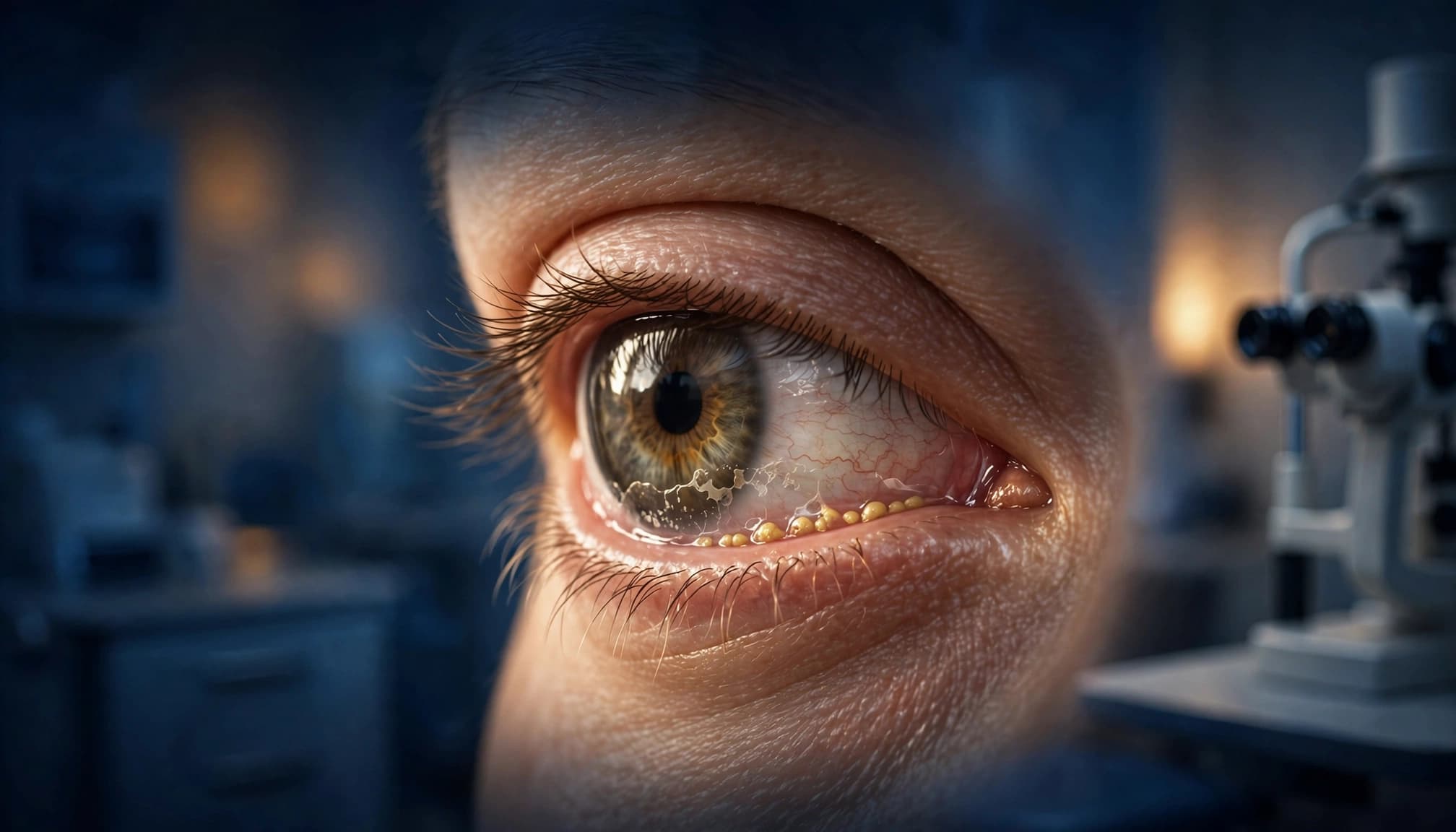
How Mebomian Gland Dysfunction Speeds Tear Loss
Meibomian glands along the eyelids produce oil that slows evaporation. Blockage or inflammation causes Mebomian gland dysfunction, a common form of evaporative dry eye. Lid inflammation and rosacea may require an eye-care professional's assessment.
Preventing Dry Eye and Protecting the Tear Film
Regular blinking and screen breaks reduce surface drying. Limiting exposure to fans, smoke, wind, and very dry air also helps; a humidifier may be useful indoors.
Warm compresses and gentle lid cleansing support gland health. Outdoor eyewear can block wind. Contact lens wearers may need changes to fit, wearing time, or replacement schedules. Medication reviews matter, while evidence for omega-3 supplements remains mixed.
Diagnosis and Treatment, Including Miebo
Diagnosis combines symptom history with an examination of the lids, tear film, and eye surface. Preservative-free artificial tears suit frequent use, while lipid-containing drops may help when evaporation drives symptoms.
Warm compresses, lid massage, and cleansing are common first measures. Prescription anti-inflammatory drops, selected oral medicines, gland expression, and thermal procedures may follow. The FDA's Miebo trial snapshot covers its approved dry-eye indication. Miebo is prescription perfluorohexyloctane, typically dosed four times daily. Miebo treatment information describes its anti-evaporative approach. Nova Tears is a lipid-layer lubricant discussed for evaporative dry eye, not an FDA-approved disease-specific MGD treatment; availability varies by country.
Frequently Asked Questions
Can dry eye make eyes water?
Yes. Eye irritation can trigger reflex tearing, yet those tears may not form a stable protective layer.
Are omega-3 supplements a dry-eye cure?
No. Some people use them as part of a broader routine, but research hasn't established them as a reliable stand-alone treatment.
Must contact lens wearers stop using lenses?
Not always. However, pain, redness, or worsening blur warrants stopping lens wear until an eye-care clinician assesses the eye.
Final Thoughts
Treatment works best when it targets the cause, especially tear evaporation and eyelid gland problems. Sudden vision loss, severe pain, major light sensitivity, thick discharge, or a very red eye with headache or nausea needs urgent care.
Pain and redness in a contact lens wearer also require prompt assessment. A tailored clinical evaluation is safer than indefinite self-treatment.